




SCHOOL RESOURCES
Symptom presentation, impact, and accommodations for students with PANS/PANDAS
Students with PANS/PANDAS may experience dramatic and concerning changes in behavior, cognition, academic performance, handwriting, attention, anxiety, and executive functioning. Schools can support affected students through accommodations, collaborative planning, and individualized educational services when appropriate.
Pediatric Acute-onset Neuropsychiatric Syndrome (PANS) is a medical condition in which a child experiences an acute and dramatic change in behavior, emotions, thinking, or daily functioning. Symptoms often appear abruptly and may include obsessive-compulsive behaviors (OCD), severe food restriction, anxiety, mood changes, difficulties with attention and learning, sleep disturbances, behavioral changes, and other forms of psychological distress.
Pediatric Autoimmune Neuropsychiatric Disorders Associated with Streptococcal Infections (PANDAS) is a specific subtype of PANS in which symptom onset is associated with a streptococcal (strep) infection.
Because symptoms can emerge suddenly and significantly affect school performance, behavior, attendance, and social interactions, teachers and school staff are often among the first to notice that something has changed.
What are the red flags of PANS/PANDAS?
Acute and dramatic onset of mood and behavioral changes are red flags of possible PANS and PANDAS. Consider PANS/PANDAS if a child experiences a sudden and dramatic onset of unwanted thoughts, fears, rituals, obsessive compulsive symptoms, and/or an overall abrupt decline in mental health.
What causes PANS/PANDAS?
Strep or other infections, such as Mycoplasma pneumoniae, influenza, upper respiratory infections, or sinusitis, may trigger an abnormal immune response that causes inflammation in the brain and can result in dramatic behavioral, emotional, and academic changes.
What is the treatment for PANS/PANDAS?
PANS/PANDAS is treatable. Treatment is a three pronged approach that addresses the source (infections), the immune system dysfunction, and the symptoms.
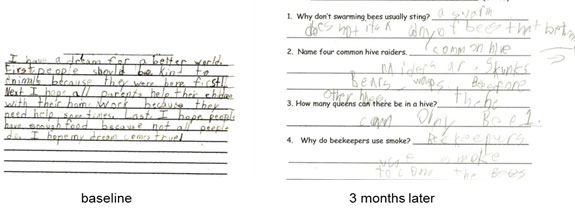
Students experiencing PANS/PANDAS may show a sudden and noticeable change in school functioning. These changes can fluctuate in a student who was previously performing at or near their typical level.
Educators, nurses, and staff may observe:
- Handwriting changes
- Difficulty in math
- Memory issues
- Inability to focus
- Cognitive changes
- Anxiety due to obsessions and compulsions
- Decreased processing speed
- Severe separation anxiety
- Increased visits to the restroom
- Changes in social interaction with peers
- Increased absences
- Difficulties in areas such as visual-spatial recall, executive functioning, and fine motor dexterity
1. Refer the child to be checked for strep and other infections.
2. Provide resources to physician, family, and school staff.
3. Be supportive of the child and family. This is a difficult time as they navigate a new illness and an increase in family stress.
4. Work closely with teachers, school counselors, and school based therapists (OT/PT/Speech) to create a healthy and productive environment for the child.
5. If strep is the known trigger, notify the family of new strep cases in the classroom. PANDAS children can worsen not only with re-infection, but also with exposure to strep.
6. Provide school accommodation ideas. A 504 plan or IEP may be needed. See list below.
Considerations for Health Care Professionals in the Education of PANS-Affected Students
Health care professionals, school staff, and families with PANDAS/PANS children are encouraged to work together to create a foundation for a successful school year. In order to help them navigate this process, PANDAS Physicians Network collaborated with Jamie Candelaria-Greene PhD, BCET to offer the resource, Considerations for Health Care Professionals in the Education of PANS-Affected Students.
This publication discusses the unique symptomatology and presentation of PANS in students, collaboration with the schools, and education.
What is the difference between a 504 plan and an IEP?
A 504 plan typically includes accommodations and supports for a student with an identified disability. It does not need to be in writing. An IEP falls under the Individuals with Disabilities Education Act (IDEA). It is designed for students with disabilities that require individualized special education and related services. An IEP is a written plan that includes goals, tracks progress, and lists services to be provided from specialists.
Accommodation Ideas
Separation anxiety and OCD symptoms
Work with school psychologist, counselor, and school based therapists to develop a plan. Share with school the ERP (Exposure and Response Prevention) and CBT (Cognitive Behavioral Therapy) strategies that have been put in place.
Urinary problems
If the PANDAS/PANS child develops polyuria, the frequent need to urinate, and/or secondary enuresis, work to develop a plan that allows the child additional bathroom breaks as symptoms warrant.
ADHD-like symptoms (Attention Deficit/Hyperactivity Disorder)
Preferential seating (front of class), short and concise directions, additional time for assignments, and allowing the use of earbuds to help avoid distractions.
Restrictive eating
PANDAS/PANS children may experience restrictive eating due to fear of choking, vomiting, or contamination fears. Sensory sensitivities (texture and smell) may also negatively impact eating. Work with school to give extra time for lunch, provide a separate eating space, or allow the student to go home for lunch.
General
Do not take off for spelling or penmanship unless that is the task that is being tested on. Issues may include margin drifts and overall decline in dexterity and/or handwriting.
Orthographic issues
Copying tasks may be difficult for a child with PANDAS/PANS. Allow the use of a keyboard.
Poor physical and cognitive stamina, pain*
Shorter school day with reduced academic load, less homework, rest periods during the day (perhaps in the nurse’s office), and adapting physical education requirements
Dysgraphia or handwriting difficulties*
Having a note-taker in class, dictating tests and homework, enlarging worksheets, writing on large grid paper, and using a keyboard, voice-recognition software, or audio recorder
Dyscalculia and math difficulties*
Using a calculator or times table and working with a resource teacher or tutor
Slowed processing speed*
Decreasing the number and length of assignments, allowing extra time for tests and in-class assignments, and giving directions in written and oral form
*PANDAS/PANS Research Consortium treatment recommendations